

Wine Shipping California: Your Complete Compliance Guide
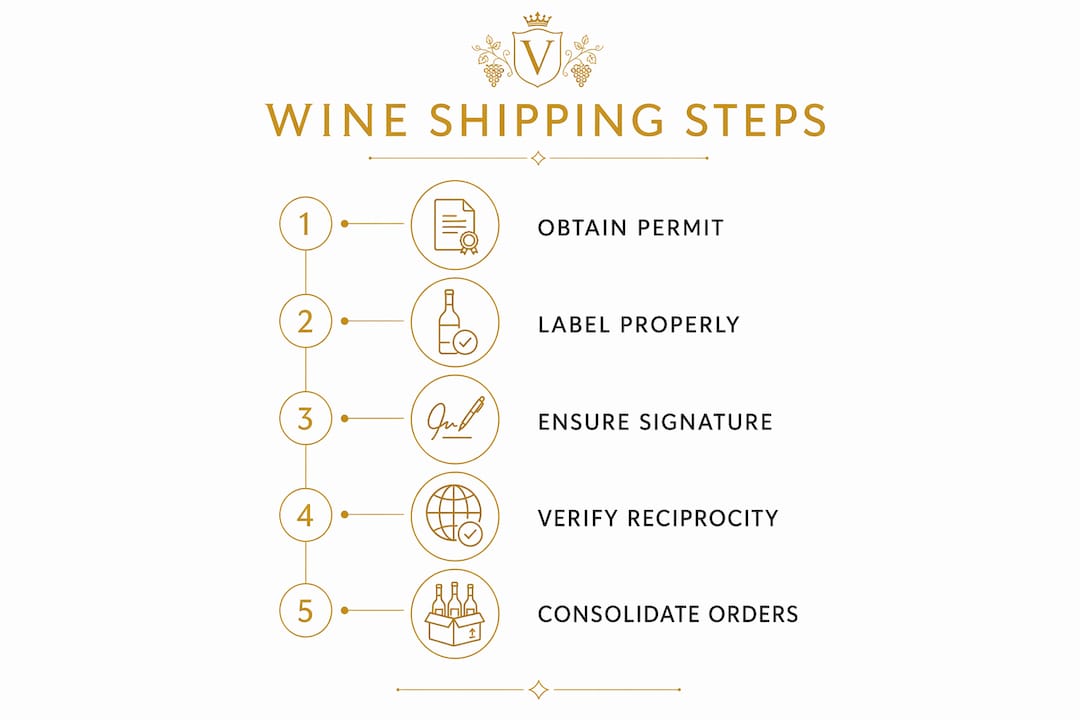
Yes, wine can be shipped into and within California — but only when the shipper holds the right permit, follows adult-signature delivery rules, collects and remits the correct taxes, and meets California’s labeling requirements. Here is what you need to know before you buy or ship.
For buyers, confirm before you order:
- Your vendor holds a valid California Direct Shipper Permit (Type 82 for out-of-state sellers)
- Outer packaging is labeled “CONTAINS ALCOHOL: SIGNATURE OF PERSON AGE 21 YEARS OR OLDER REQUIRED FOR DELIVERY” per BPC § 23661.3
- The vendor uses a commercial carrier (FedEx or UPS) with an alcohol-shipping agreement — USPS is prohibited for alcohol shipments
- You understand the vendor’s return and refusal policy if delivery is missed
For sellers, the minimum compliance stack:
- Obtain the Type 82 Direct Shipper Permit ($120 one-time application fee plus a $30 annual fee)
- Register with CDTFA for sales/use tax and excise reporting
- Register with CalRecycle for Bottle Bill compliance (required since January 1, 2024)
- Require adult-signature delivery on every shipment
California places no per-consumer quantity limit on inbound wine shipments for personal use when the shipper holds the required permits and follows age-verification rules.
Table of Contents
- How long does wine shipping to California actually take?
- What are the legal risks of shipping wine without a permit?
- Are there restrictions on shipping Italian wines into California?
- How do interstate reciprocity laws affect your California delivery?
- Vinumitalia ships authentic Italian wines to California, compliantly
- Key Takeaways
How long does wine shipping to California actually take?
Ground shipping within California typically runs 1–3 business days. Shipments from out-of-state Italian wine importers based on the East Coast generally arrive in 3–5 business days via ground, or 1–2 days with expedited air service. Carriers commonly limit delivery attempts before returning a package to the shipper, so plan around your schedule.
Costs vary by weight, distance, and carrier tier. Shipping costs vary by weight, distance, and carrier tier; single bottles cost more per unit than bulk shipments. Consolidated orders lower the per-bottle cost meaningfully, which is why wine club shipments and case orders tend to offer better value than single-bottle purchases.
What are the legal risks of shipping wine without a permit?
Shipping wine into California without a Direct Shipper Permit is a misdemeanor under California Business and Professions Code § 25617. That exposure extends beyond the shipper: carriers and recipients who knowingly participate in an unlicensed shipment can also face liability. California’s multi-layered compliance framework means state ABC rules, federal TTB excise obligations, and destination-state permit requirements all apply simultaneously. Penalties for non-compliance can include permit suspension or revocation, fines, and criminal misdemeanor charges.

Are there restrictions on shipping Italian wines into California?
California does not restrict specific Italian varietals or appellations at the border. What matters is the shipper’s permit status and the wine’s federal TTB label approval, which all commercially imported Italian wines must carry before entering U.S. commerce. One important operational note: a Direct Shipper Permit authorizes shipment only of wine the permit holder produced or bottled. A retailer or importer cannot ship a third-party producer’s wine under its own permit — the licensed importer of record must handle that leg of the supply chain.
How do interstate reciprocity laws affect your California delivery?
California’s reciprocity statute (BPC § 23661.2) allows individuals in reciprocating states to ship up to two cases (no more than nine liters each) per month to a California adult for personal use. For business-to-consumer shipments from licensed out-of-state wineries, the Type 82 Direct Shipper Permit is the standard route and carries no quantity cap for permitted shippers.
Vinumitalia ships authentic Italian wines to California, compliantly
Sourcing a bottle of Barolo or a natural Sicilian white from a small family producer in Italy should feel like a pleasure, not a compliance puzzle.
At Vinumitalia, we handle the full compliance picture so you don’t have to. Our California-based operation manages Direct Shipper Permit verification, CDTFA tax remittance, CalRecycle registration, and adult-signature carrier fulfillment on every order. Every bottle in our curated Italian wine collection arrives in temperature-appropriate packaging with proper alcohol labeling. For breakage or carrier refusals, our claims process is straightforward.
Our wines come directly from small, family-run producers — including organic and biodynamic selections from estates like those in Trentino and across Sicily — so provenance is never a question.
Pro Tip: Choose signature-required shipping at checkout and consolidate into a case order when possible. Fewer shipments mean lower per-bottle costs and less exposure to carrier return cycles.
Shop our full collection and get compliant California delivery on wines that genuinely tell a story.
Key Takeaways
Lawful wine shipping into California requires a valid Direct Shipper Permit, adult-signature delivery, proper labeling, and tax registration with both CDTFA and CalRecycle.
| Point | Details |
|---|---|
| Permit is non-negotiable | Out-of-state sellers need a Type 82 Direct Shipper Permit ($120 application + $30 annual fee). |
| No quantity cap for permitted shippers | California imposes no per-consumer limit when the shipper holds required permits and follows age-verification rules. |
| USPS is not an option | Commercial carriers (FedEx, UPS) with alcohol-shipping agreements are the only lawful route. |
| Unlicensed shipping is a misdemeanor | BPC § 25617 exposes shippers, carriers, and knowing recipients to criminal liability. |
| Vinumitalia handles compliance end-to-end | Permit checks, tax remittance, CalRecycle registration, and adult-signature fulfillment are built into every order. |