

Prosecco Sugar Content: Grams per Glass and What to Buy
Prosecco sugar content varies significantly by label. EU RS categories set the official ranges: Brut Nature at 0 g/L, Extra Brut at 0–6 g/L, Brut at 0–12 g/L, Extra Dry at 12–17 g/L, Dry at 17–32 g/L, and Demi-Sec at 32–50 g/L. For a standard U.S. 5 oz (150 ml) pour, the sugar content ranges from none in Brut Nature to distinctly sweet in Demi-Sec. Most Americans drinking a Brut Prosecco consume relatively low sugar per glass — less than a small amount.
Here is a quick snapshot of what each label delivers per 150 ml glass:
- Brut Nature: 0 g/L RS → 0 g sugar per 150 ml
- Extra Brut: 0–6 g/L → 0–0.9 g per 150 ml
- Brut: 0–12 g/L → up to ~0.5 g sugar per 125 ml, or up to ~1.8 g per 150 ml
- Extra Dry: 12–17 g/L → 1.8–2.55 g per 150 ml
- Dry: 17–32 g/L → 2.55–4.8 g per 150 ml
- Demi-Sec: 32–50 g/L → 4.8–7.5 g per 150 ml
TL;DR: A Brut Prosecco contains less sugar per glass than a single strawberry. A Demi-Sec is closer to a small cookie’s worth. The label tells you almost everything — once you know how to read it.
Table of Contents
- What do Prosecco label terms actually mean?
- How much sugar and how many calories are in a glass?
- Why does Brut Prosecco still taste fruity and sweet?
- Is Prosecco a good choice if you have diabetes?
- How winemaking decisions set the sugar level in Prosecco
- Practical tips for buying lower-sugar Prosecco in the U.S.
- Quick reference: sugar and calories by Prosecco label
- Key Takeaways
- Why low-sugar Prosecco matters to us at Vinumitalia
- Find your next bottle at Vinumitalia
- Useful sources for further reading
What do Prosecco label terms actually mean?
The terminology on a Prosecco bottle follows EU sparkling wine law, and those categories are consistent across producers. Residual sugar (RS) is measured in grams per liter, and every label class corresponds to a defined RS band. The confusion most shoppers run into is that the words themselves are misleading. “Extra Dry” sounds drier than “Brut,” but it is actually sweeter. “Dry” sounds like the driest of all, yet it sits in the middle of the sweetness spectrum.
Here is how the six Prosecco sweetness classes map to their official RS ranges:
| Label | RS Range (g/L) | Sweetness Character |
|---|---|---|
| Brut Nature | 0 | Bone dry, no added sugar |
| Extra Brut | 0–6 | Very dry, minimal sweetness |
| Brut | 0–12 | Dry, slight fruit impression |
| Extra Dry | 12–17 | Off-dry, noticeably sweeter |
| Dry | 17–32 | Medium sweet |
| Demi-Sec | 32–50 | Distinctly sweet, dessert-friendly |
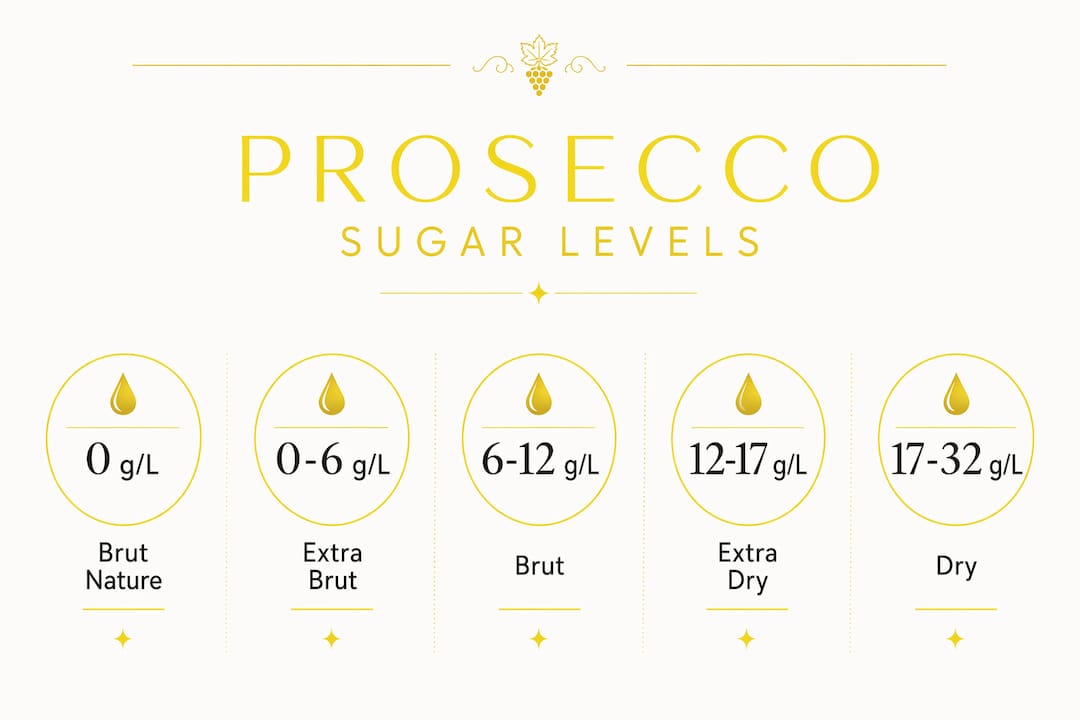
The Extra Dry vs. Brut confusion trips up even experienced wine drinkers. Extra Dry is the most popular style sold in the U.S., partly because the name implies restraint. In reality, it contains more than twice the sugar of a Brut. If you have been reaching for Extra Dry thinking it is the “dry” choice, you have been drinking the sweeter bottle.
Pro Tip: RS information is not always on the front label. Check the back label in small print, or look up the producer’s tasting notes online before you buy. Some Italian producers print g/L directly; others only list the category term.
How much sugar and how many calories are in a glass?
Converting RS from g/L to grams per glass is straightforward. Multiply the RS value (in g/L) by the volume of your pour in liters. For a 150 ml glass, that is 0.150 L. For a 125 ml glass, it is 0.125 L.
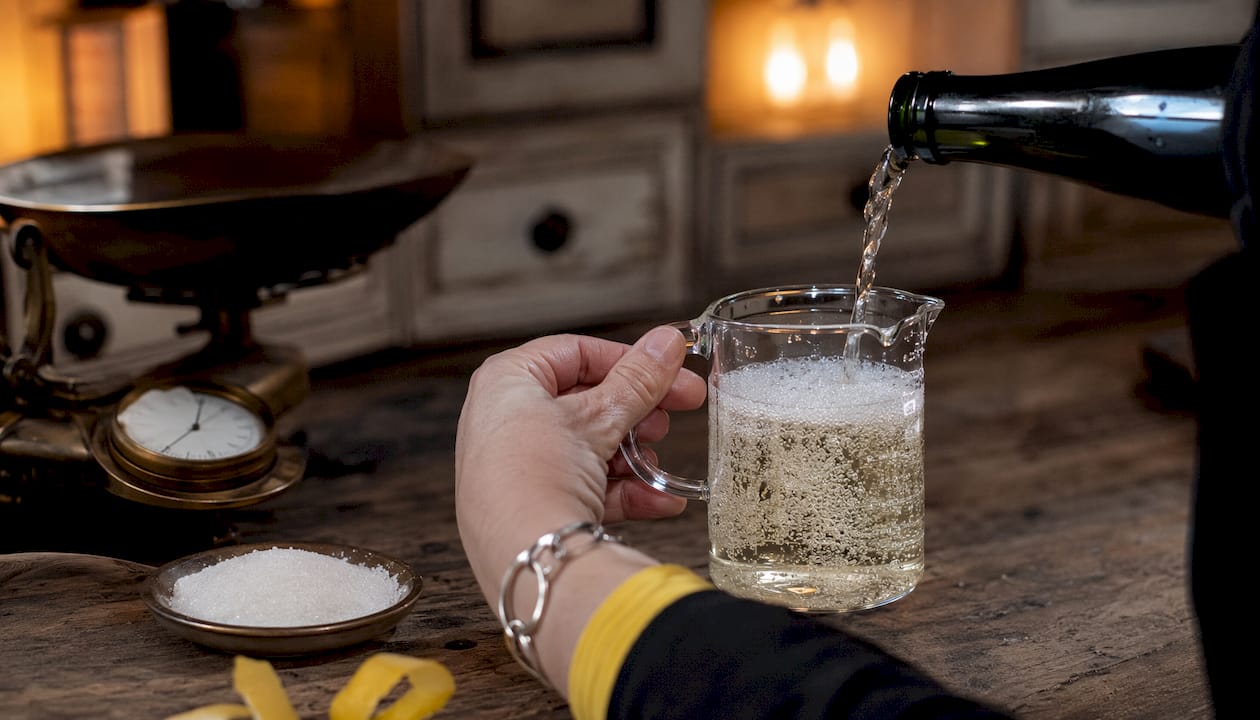
Example: A Brut at 12 g/L × 0.150 L = 1.8 g sugar per 150 ml glass. At the lower end of the Brut range (say, 3 g/L), that same pour contains just 0.45 g. A 125 ml glass of Brut Prosecco can contain up to 1.5 g sugar depending on where the producer lands within the Brut band.
For calories from sugar specifically, the standard conversion is 1 g sugar = 4 kcal. Keep in mind that total Prosecco calories also include alcohol calories, which are separate from sugar calories.
| Label | RS (g/L) | Sugar per 150 ml (g) | Sugar kcal per 150 ml |
|---|---|---|---|
| Brut Nature | 0 | minimal sugar | minimal sugar kcal |
| Extra Brut | 0–6 | low sugar range | low sugar kcal range |
| Brut | 0–12 | modest sugar range | moderate sugar kcal range |
| Extra Dry | 12–17 | moderate sugar range | moderate sugar kcal range |
| Dry | 17–32 | higher sugar range | higher sugar kcal range |
| Demi-Sec | 32–50 | distinctly sweet range | distinctly sweet sugar kcal range |
Note: These figures assume a 150 ml pour and use 1 g sugar = 4 kcal. Actual sugar calories are a small fraction of total serving calories; alcohol contributes the majority.
Compared to many other alcoholic drinks, even an Extra Dry Prosecco is relatively low in sugar. Prosecco often runs slightly sweeter than Champagne but remains low-sugar overall when measured against cocktails, sweet wines, or flavored hard seltzers.
Why does Brut Prosecco still taste fruity and sweet?
Measured sugar and perceived sweetness are not the same thing. A Brut Prosecco at 8 g/L can taste noticeably fruit-forward even though it contains very little residual sugar. The reason comes down to the Glera grape itself.
Glera’s aromatic profile produces vivid notes of pear, white peach, and honeysuckle. Those aromas register on the palate as sweetness even when the wine is technically dry. Acidity also plays a role: a lower-acid Prosecco will taste rounder and softer, which the brain often interprets as sweetness. Alcohol adds body that amplifies that impression further.
Winemakers working in the Prosecco DOC and DOCG zones understand this. They often leave a small amount of RS in a Brut specifically to balance the wine’s natural acidity, preventing it from tasting sharp or austere. The result is a wine that reads as pleasantly fruity without being sweet in any meaningful nutritional sense.
Key drivers of perceived sweetness in Prosecco:
- Glera aromatics: pear, honeysuckle, and white stone fruit create a sweet impression
- Lower acidity: softens the palate and mimics sweetness
- Alcohol: adds body and warmth that reads as richness
- Fruit esters: formed during fermentation, these compounds amplify fruity notes
Pro Tip: If you want the least perceived sweetness, not just the lowest RS, choose Brut Nature or Extra Brut. The Glera aromatics are still present, but without any residual sugar to reinforce them, the wine tastes crisper and more mineral.
Is Prosecco a good choice if you have diabetes?
Prosecco, particularly Brut Nature and Extra Brut styles, is among the lower-sugar sparkling wines available. For many people monitoring carbohydrate intake, a small pour of Brut Prosecco can fit within a balanced approach. That said, suitability is genuinely individual and depends on medication, overall diet, and how your body responds to alcohol.
Medical caution: Alcohol affects blood sugar in ways that go beyond carbohydrate content. It can cause delayed hypoglycemia in people using insulin or certain oral medications. If you have diabetes or another condition that requires blood sugar management, consult your healthcare provider before drinking, even low-sugar wines.
Practical steps for people monitoring sugar intake:
- Choose Brut Nature or Extra Brut for the lowest RS per glass
- Measure your pour: a 4 oz (120 ml) glass rather than a full 5 oz reduces sugar and alcohol intake proportionally
- Avoid sugary mixers: adding juice, liqueur, or flavored syrups to Prosecco can multiply the sugar content several times over
- Track carbs per serving using the conversion table above (g/L × liters poured)
- Monitor blood glucose after drinking, especially if you are new to including wine in your diet
Portion control matters as much as label choice. Even a Brut Nature can affect blood sugar through alcohol’s metabolic effects, independent of its zero RS.
How winemaking decisions set the sugar level in Prosecco
Residual sugar in Prosecco is not accidental. It is the direct result of deliberate production choices made at specific points in the winemaking process.
The primary lever is fermentation timing. Yeast converts grape sugars into alcohol; when winemakers stop fermentation early, more sugar remains in the wine. Stopping it later, or allowing it to run to completion, produces a drier result. Yeast strain also matters: some strains tolerate higher alcohol levels and continue fermenting longer, naturally driving RS lower.
Prosecco is made using the Charmat method, also called the tank method, where secondary fermentation happens in pressurized stainless steel tanks rather than in individual bottles. This approach gives winemakers precise control over temperature and pressure, which in turn affects how much sugar the yeast consumes before the wine is chilled and filtered to stop fermentation. Traditional-method sparkling wines (like Champagne) go through secondary fermentation in the bottle, making RS management a different and less flexible process.
After secondary fermentation, some producers add a small amount of sugar dissolved in wine, called a dosage, to adjust the final sweetness level before bottling. Brut Nature wines receive zero dosage by definition. Extra Brut and Brut wines may receive a minimal dosage within their allowed RS bands.
How production choices connect to the label you see:
- Fermentation stopped early + dosage added → Extra Dry or Dry
- Fermentation run longer + minimal or no dosage → Brut or Extra Brut
- Fermentation complete + zero dosage → Brut Nature
- Charmat method → consistent, fruit-forward style with reliable RS control across large production runs
Practical tips for buying lower-sugar Prosecco in the U.S.
Shopping for low-sugar Prosecco is easier once you know what to look for. The label category is your first filter, but a few additional steps help you find bottles that genuinely deliver on the promise.
What to look for on the label and online:
- Target Brut Nature or Extra Brut first; Brut is a solid everyday choice if those are unavailable.
- Check the back label for a printed RS figure in g/L — some producers include it, and that number is more precise than the category alone.
- Look up the producer’s website or tasting notes before buying; many family-run Italian producers publish RS details that U.S. retailers do not always display.
- Choose organic or biodynamic Prosecco when possible. Low-intervention producers tend to work with natural fermentation, which often results in drier, more terroir-expressive wines.
- Ask your retailer or wine club for RS specifics. A knowledgeable seller should be able to tell you where a given bottle lands within its label category.
Serving tips that reduce perceived sweetness:
- Serve Prosecco well chilled (around 45°F / 7°C). Cold temperature suppresses perceived sweetness and sharpens acidity.
- Pair with salty or acidic foods: oysters, aged Parmigiano-Reggiano, lemon-dressed salads, or cured meats all make a Brut taste crisper.
- Avoid sugary cocktail mixers. A Bellini made with peach purée can add 10–15 g of sugar to a glass that started with under 2 g.
- Standardize your pour at 125–150 ml. Larger pours increase both sugar and alcohol intake proportionally.
Pro Tip: When in doubt at a restaurant, ask for the Brut rather than the “house Prosecco.” House pours are often Extra Dry, which is the most popular commercial style but also the sweetest of the commonly served options.
Quick reference: sugar and calories by Prosecco label
The table below gives you a single resource for comparing sugar levels in Prosecco across all six label classes. All figures assume a 150 ml serving and use the conversion of 1 g sugar = 4 kcal. Bottle-to-bottle variation exists within each category, so treat these as reliable ranges rather than fixed values.
| Label | RS (g/L) | Sugar per 150 ml (g) | Sugar kcal per 150 ml |
|---|---|---|---|
| Brut Nature | 0 | minimal sugar | minimal sugar kcal |
| Extra Brut | 0–6 | low sugar range | low sugar kcal range |
| Brut | 0–12 | modest sugar range | moderate sugar kcal range |
| Extra Dry | 12–17 | moderate sugar range | moderate sugar kcal range |
| Dry | 17–32 | higher sugar range | higher sugar kcal range |
| Demi-Sec | 32–50 | distinctly sweet range | distinctly sweet sugar kcal range |
Conversion note: To calculate sugar for your own pour size, multiply the RS (g/L) by your pour volume in liters. A 120 ml pour at 12 g/L (top of Brut) = 1.44 g sugar. Producers within the same category can vary, so checking the back label for a printed g/L figure gives you the most accurate number.
Key Takeaways
Brut Nature and Extra Brut are the lowest-sugar Prosecco options, delivering under 1 g of sugar per 150 ml glass, while Extra Dry and Dry are counterintuitively sweeter than their names suggest.
| Point | Details |
|---|---|
| Brut Nature is the driest | At 0 g/L RS, Brut Nature contains zero sugar per glass — the clearest choice for minimal intake. |
| “Dry” label means sweeter | Extra Dry (12–17 g/L) and Dry (17–32 g/L) contain more sugar than Brut; the naming is counterintuitive. |
| Per-glass sugar is low overall | A 150 ml glass of Brut Prosecco contains up to 1.8 g of sugar. |
| Perceived sweetness differs from RS | Glera’s aromatic profile makes Brut wines taste fruity even at low residual sugar levels. |
| Vinumitalia curates low-sugar options | Vinumitalia sources Brut, Extra Brut, organic, and biodynamic Prosecco from small Italian family producers with transparent RS information. |
Why low-sugar Prosecco matters to us at Vinumitalia
We have always believed that the best Italian wines tell you exactly what they are. That philosophy applies to Prosecco as much as it does to any natural red from Campania or an orange wine from Friuli. When we source Prosecco for our collection, we look specifically for small, family-run producers in the Prosecco DOC and DOCG zones who are transparent about their winemaking: fermentation practices, RS levels, and whether they work organically or biodynamically.
The reason is simple. Our customers ask us these questions. They want to know what is in the bottle, not just what the label says. A Brut Nature from a producer who farms without synthetic inputs and ferments to dryness naturally is a fundamentally different wine from a mass-produced Extra Dry that hits its RS target through dosage adjustment. Both are legal Prosecco. Only one tells a story worth sharing.
If you are looking for lower-sugar options, we recommend starting with our biodynamic collection and asking us directly about RS details for any bottle. We are happy to share producer notes and help you find the right pour for your table.
Find your next bottle at Vinumitalia
Knowing your sugar levels in Prosecco is only half the work. Finding a bottle that actually delivers on that promise — from a producer you can trust — is where we come in.
Vinumitalia sources directly from small Italian family producers who share our commitment to transparency and low-intervention winemaking. Our organic wine collection includes Prosecco options from producers who publish RS details and farm without synthetic inputs. If you prefer to browse the full range, our complete collection lets you filter by style and production method. Have a question about a specific bottle’s RS or production notes? Reach out to us directly. We source these wines ourselves and can connect you with the producer information you need to make a confident choice.
Useful sources for further reading
These are the primary references that informed the figures and guidance in this article. For personal medical advice related to diabetes or blood sugar management, consult a qualified healthcare provider.
- Beverage Testing Institute — Decoding Prosecco: Covers official EU RS categories, label definitions, and how the Charmat method affects residual sugar control. The most technically detailed publicly available resource on Prosecco RS ranges.
- Wine Folly — Prosecco Wine Guide: Accessible deep-dive on Prosecco styles, label confusion (Extra Dry vs. Brut), and perceived sweetness from Glera aromatics. Recommended for readers who want a broader style overview.
- Wine Folly — Prosecco: Concise per-serving carbohydrate and calorie estimates; useful for quick reference on sugar-to-calorie conversions.
- Food & Wine — Prosecco 101: Explains how Glera’s aromatic profile creates perceived sweetness and recommends Brut Nature for drinkers who want minimal sweetness.
- DrinkWell — How Much Sugar Is in Prosecco?: Consumer-focused summary of per-glass sugar estimates for Brut Prosecco, with practical guidance for health-conscious drinkers.
- VinePair — Prosecco: Accessible category overview comparing Prosecco’s sweetness profile to other sparkling wines, with useful context for U.S. shoppers.